1. 여러가지 언어에서의 for문
(1) python
#!/usr/bin/python
for letter in 'Python': # First Example
	print 'Current Letter :', letter

fruits = ['banana', 'apple', 'mango']
for fruit in fruits: # Second Example
	print 'Current fruit :', fruit

print "Good bye!"
#!/usr/bin/python Good bye!
fruits = ['banana', 'apple', 'mango']
for index in range(len(fruits)):
	print 'Current fruit :', fruits[index]
print "Good bye!"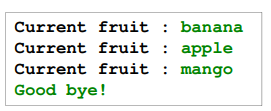
#!/usr/bin/python
for num in range(10,20): #to iterate between 10 to 20
	for i in range(2,num):
		if num%i == 0: #to determine the first factor
			j=num/i #to calculate the second factor
			print '%d equals %d * %d' % (num,i,j)
			break #to move to the next number, the #first FOR
	else: # else part of the loop
		print num, 'is a prime number'

        #else문은 loop가 리스트를 더이상 반복할 수 없을 때 수행
        #또는 for문이 정상적으로 종료했을 경우, 수행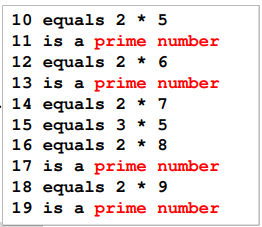
2. Logically controlled loops : 반복 제어는 Boolean을 바탕으로 함
(1) 디자인 문제
- 제어가 pretest ? posttest?
- logically controlled loop가 특별한 형태의 couting loop 또는 분리된 수행문이어야 하는지?
- 예시
: 몇몇 imperative languages (파스칼, C..)는 pretest, posttest의 logically controlled loop를 모두 포함
: C
-pretest
//while (expression) statement

scanf (“%d”, &indat) ;
while (indat >= 0) {
    sum = sum + indat ;
    scanf(“%d”, &indat) ;
}
- posttest
//do statement while (expression)
//body가 최소 한번 수행

do {
    indat = indat / 10;
    digits = digits + 1;
} while (indat>0);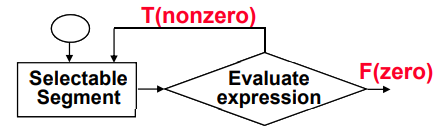
3. User-located Loop Control Mechanisms : 사용자가 지정한 곳에서 빠져나올 수 있음 -> multiple exit
(1) 디자인 문제
- conditional mechanism이 exit의 필수적인 부분이어야 하는지?
- 메카니즘이 controlled loop에 나타나야 하는지 또는 다른 제어없이 하나에만 나타나야 하는지?
(2) 예시
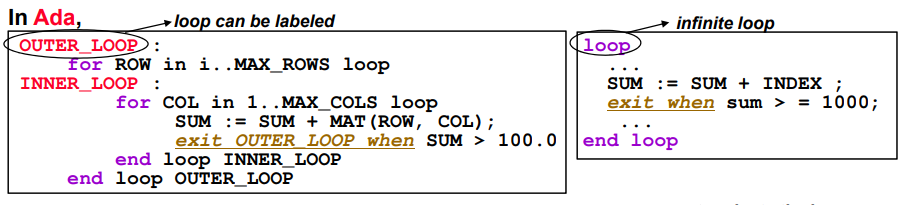
- Ada
- C
//multiple exit

while (sum < 1000) {
    getnext(value) ;
    if (value < 0) continue ; // 나머지 코드 skip
    sum = sum + value ;
}

while (sum < 1000) {
    getnext(value) ;
    if (value < 0) break ; //반복문 종료
    sum = sum + value ;
}
4. Iteration based on Data Structure
(1) Iteration based on data Structure
- 반복문은 data structure에서 elements의 수에 의해 제어됨
- 예시
: java -> for문은 Iteratable 인터페이스를 수행하는 배열의 값이나 collection의 objects를 통해 반복을 단순화
-> ex.

문자열의 myList라는 ArrayList collection이 있을 때, 다음의 명령문은 모든 elements를 반복하면서 각각을 myElement로 세팅
: C#

StrList의 각 원소들을 순서대로 돌아가면서 반복문 수행
5. Unconditional Branching : 수행 제어를 프로그램의 특정 위치로 전송
(1) 문제점
- goto 같은 경우, 수행 흐름을 제어하는 가장 강력한 명령문이지만, 사용시 위험할 수도 있음
- readability는 명령문의 수행 순서와 코드의 순서가 같을 때 가장 좋음 (top -> bottom)
- 자바와 같은 몇몇 언어는 goto문 없이 제작됨
- goto문이 제거된 언어들은 이를 대체하기 위한 추가적인 제어문을 가지고 있음 (반복문 또는 subgrogram exit 형태)
(2) Label
- ALGOL 60, C : identifier
- FORTRAN, Pascal : unsigned integer
- PL/1 : 변수
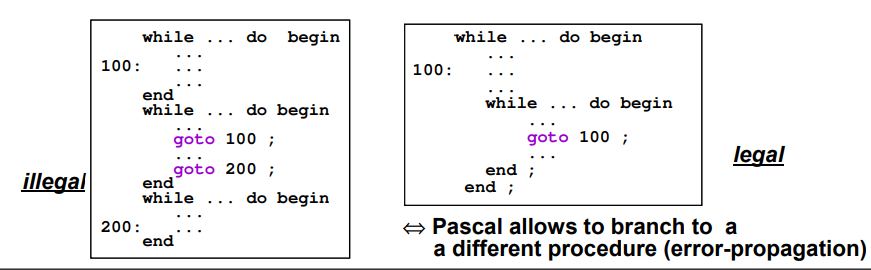
(3) branches의 제한
- 파스칼
: 파스칼 라벨은 변수인 것처럼 선언돼야함, 하지만 parameter로 pass할 수 없고, 저장 수정 안됨
: goto는 compound문의 수행이 이미 시작됐고 종료하지 않는 한, control 구조체의 compound문에서 명령문을 타깃으로 가지지 않음
6. Guarded Commands (Dijkstra)
(1) Dijkstra's selection construct
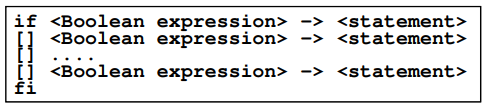
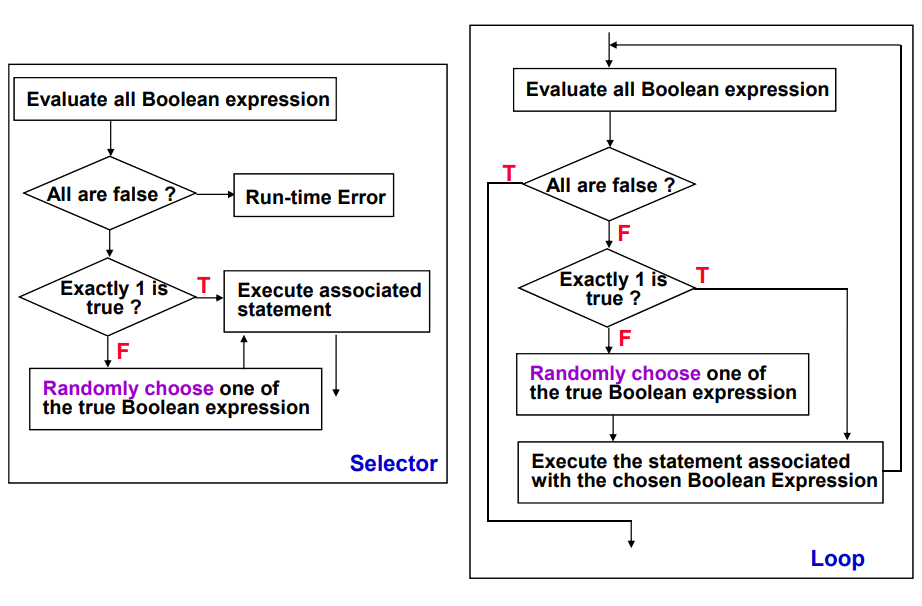
- 모든 Boolean 표현식은 수행하는 동안 contruct에 도달할 때마다 평가됨
만약 하나 이상의 표현식이 참이면, 참인 표현식 중 하나가 random으로 골라서 수행됨
참인 것이 없으면 프로그램을 종료시키는 run-time error가 발생함
-> 프로그래머가 모든 가능성을 고려하고 나열하도록 함 (exhaustive listing)
- Ada
if i = 0 -> sum := sum + i
[] i > j -> sum := sum + j
[] j > i -> sum := sum + i
fi
if (i=0) and (j=1) 일 때, 1, 3 조건식을 만족하므로 이 중 하나를 랜덤하게 선택하여 수행 (결과는 같음)
(2) Dijkstra's loop structure

모두 F가 될 때까지 반복문을 수행
선택은 random, 결과는 같음
+) concurrent vs. parallel processing
concurrent processing : 디스크에 있던 프로그램이 메모리로 올라가서 프로세스가 되는데 이 프로세스는 cpu 안에서 프로세스가 time-sharing하면서 조금씩 수행하는데 우리에겐 동시에 수행하는 것처럼 보여짐
parallel processing : concurrent processing을 할 때 메모리가 올려진 프로세스들이 진짜 cpu를 하나씩 할당해서 처리
'PL' 카테고리의 다른 글
| [PL] CH9. Subprograms (Module) (3) (0) | 2022.05.19 |
|---|---|
| [PL] CH9. Subprograms (Module) (2) (0) | 2022.05.17 |
| [PL] CH9. Subprograms (Module) (0) | 2022.05.10 |
| [PL] CH8. Statement-Level Control Structures (0) | 2022.05.03 |
| [PL] CH7. Expressions and the Assignment Statement (0) | 2022.05.03 |


